GSK Breath clean - In pharmacy air quality service
GSK released a nasal spray called Otrivin Breath clean to help people who suffers from allergies and other respiratory problems. The team and I helped the client to start with the product and create a customer centric and multi touch-points service ecosystem to create more awareness about the root cause of their respiratory problems (most of the case city pollution).
My project responsabilities:
Conducting ethnography research, Secondary desk research, personas creations, stakeholder's
co-creation activities and management, digital prototype, physical prototype, design thinking activities, qualitative user testing validations.
Role: Service/Visual Designer
Year: 2018
Company: fjord part of Accenture Interactive
Client: GSK for Otrivin
Skills involved: #Service design, #Visualdesign,
#interactiodesign #UX/UI #Strategy
The pollution problem statement
We had an opportunity to help people reduce their pollution-related symptoms and feel more in control
of their approach against pollution. However, consumers don’t know how the body’s defences work to clean
the air we breathe, so they also don’t know why a daily nasal wash could help. Pollution is a complex topic,
but without established public education, and treatment programmes from HCP’s, consumers
get often-conflicting information from a range of sources.
Pharmacists are a key source of information on general health and guidance on symptomatic treatments.
They currently don’t provide much guidance on the health impacts of pollution, partly due to a lack
of clear guidance on how to diagnose and treat pollution-related symptoms.
We interviewed consumers
and pharmacists.
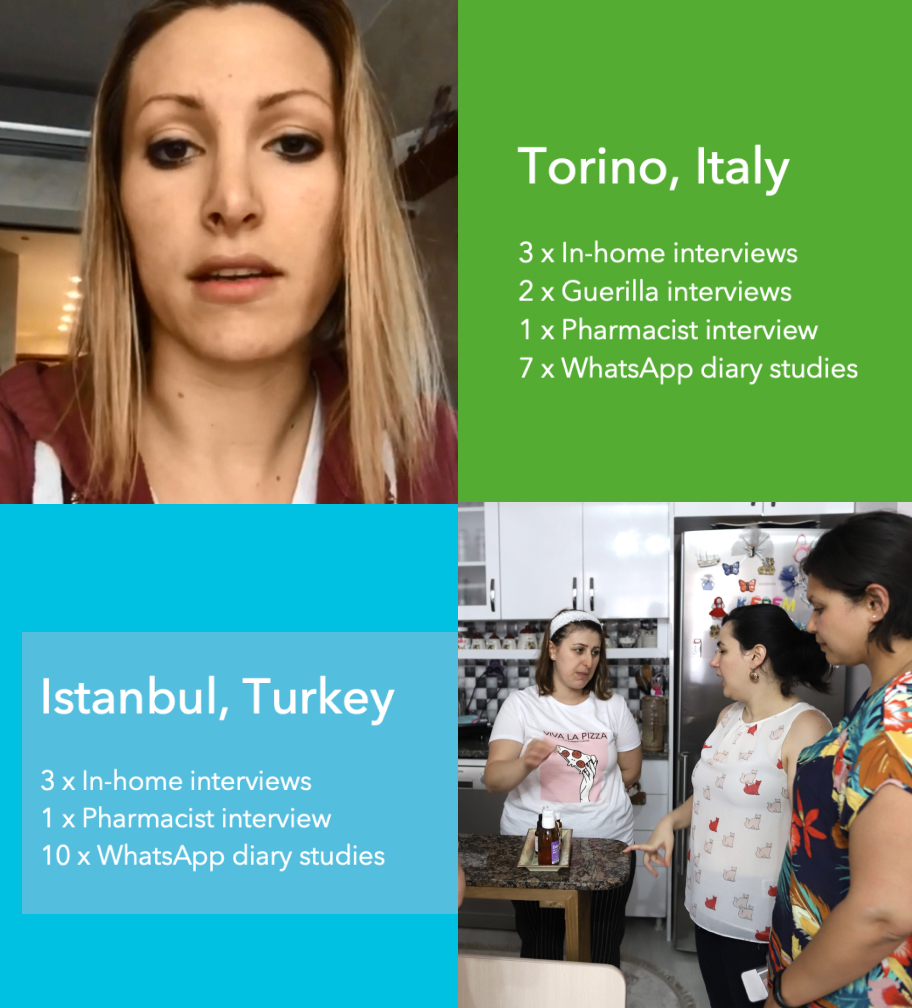
We flew to Turin and Instanbul (two of the most polluted cities in EU) we visited their homes and workplaces to discuss and observe their attitudes and behaviour towards air quality
and pollution.
The research insights
Our personas:
Canson, the pharmacist
She is very aware of the risks associated with pollution exposure. She has a lot of people come in the pharmacy with allergy or asthma like symptoms. They rarely recognise that the symptoms are linked to pollution.
She is concerned about the way people experience
and cope with pollution.
She tries to spend time talking to consumers and educating them about the risks of pollution but it’s not always possible. When the pharmacy is busy there is no time and it’s there are no good sources of information I can refer them to.


Our personas:
Julia, the consumer
Julia is a stay at home mum and lives in the suburbs of Istanbul with her husband and 5-year old son. From time to time here and her husband suffer from coughing and allergies. Her son
is diagnosed with asthma which makes Julia very cautious.
She tries to stay in-doors most of the time, because she believes that the outside air makes everybody feel worse.
She is highly sensitive to change of weather or environment.
The service concept
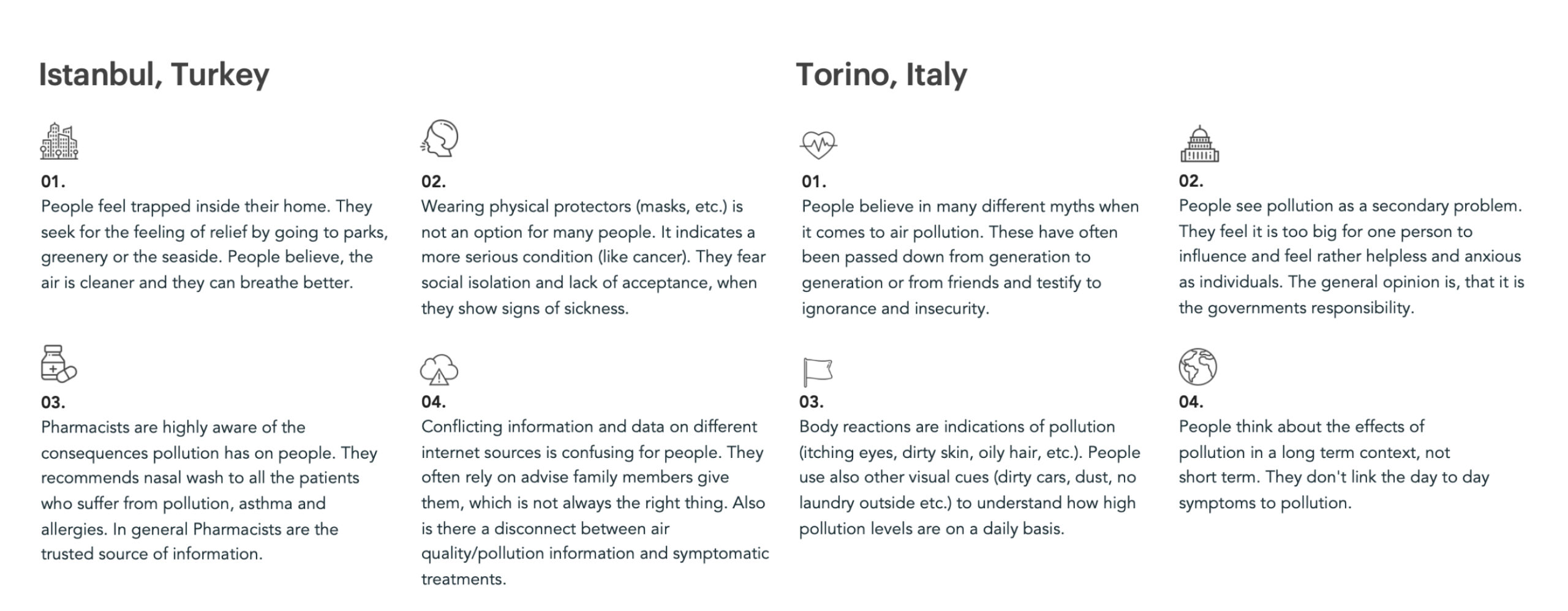
People are concerned about pollution but feel helpless to solve it, they think it is the responsibility
of the government. Some try to avoid it by not going outside and can become trapped within
their homes. People don’t recognise the link between pollution and daily symptoms, but they
just treat symptoms as they occur, putting themselves at risk of the longer term effects of pollution.
We can’t solve pollution, but we can help people feel more in control.
What if Breathe Clean were a service, combining the benefits of a daily
defence programme, with accessible lifestyle support?
A service that enables pharmacists to take a key role in both diagnoses
and treatment advice of pollution symptoms.
Breathe Clean:
An air quality service for consumers, enabled through pharmacies
For the consumer
- Daily defence
- Lifestyle support
For the pharmacist and for GSK
- Awareness
- Education
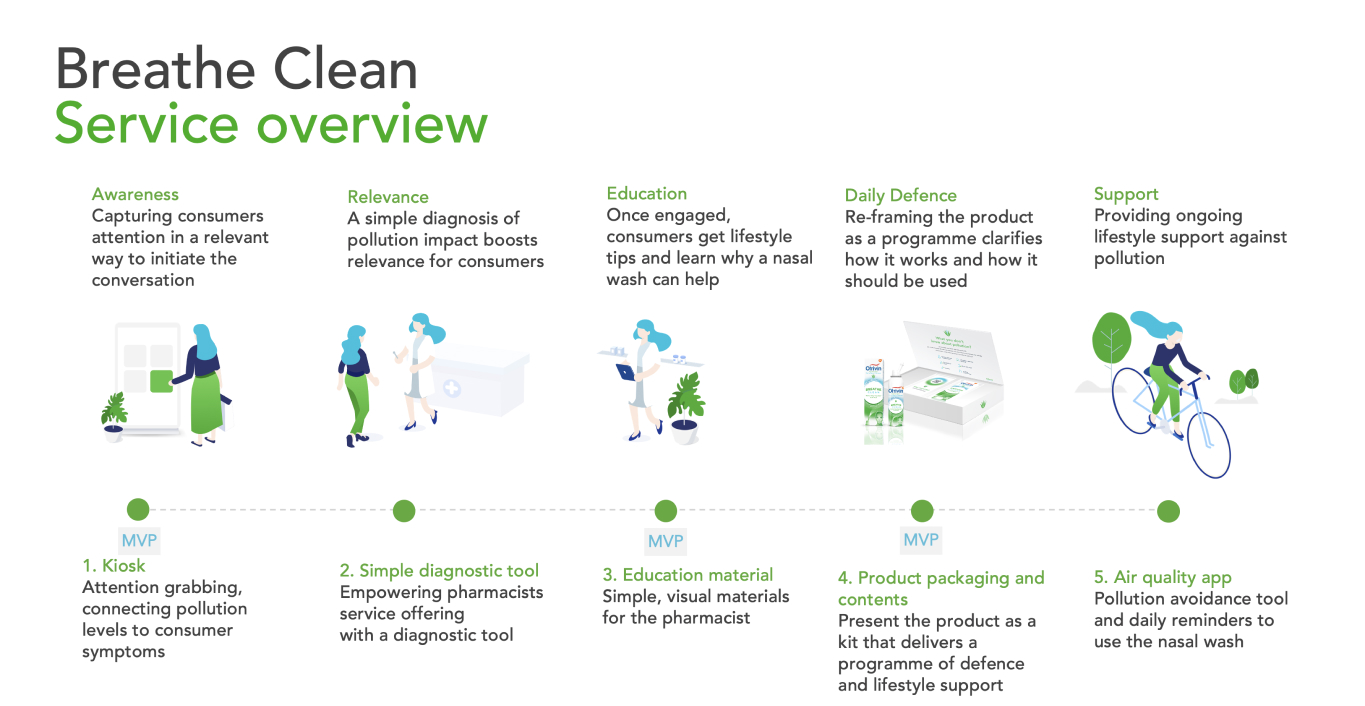
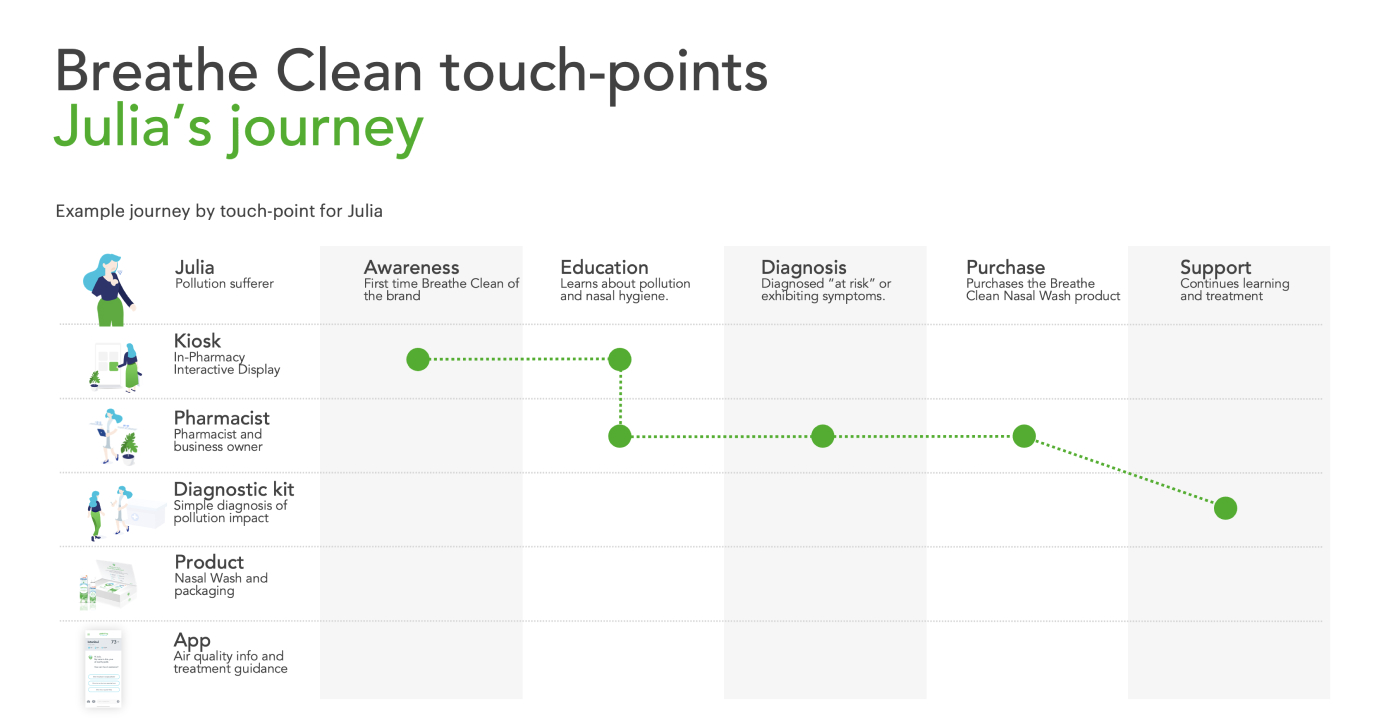
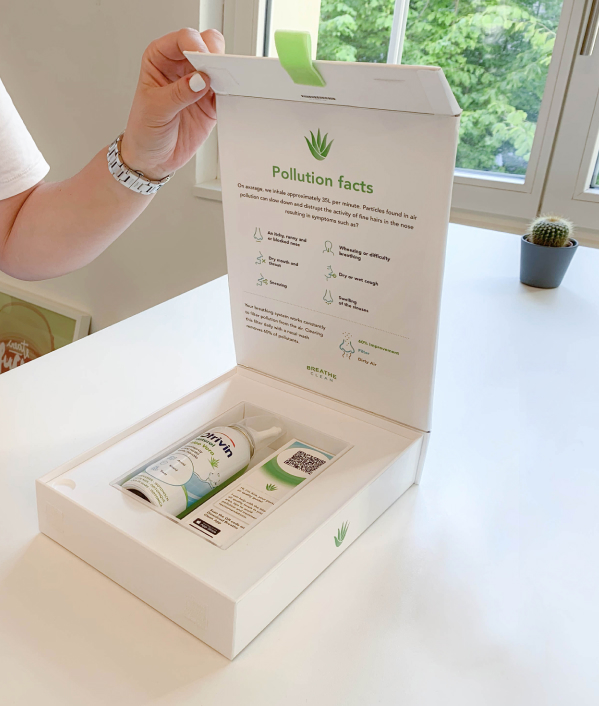
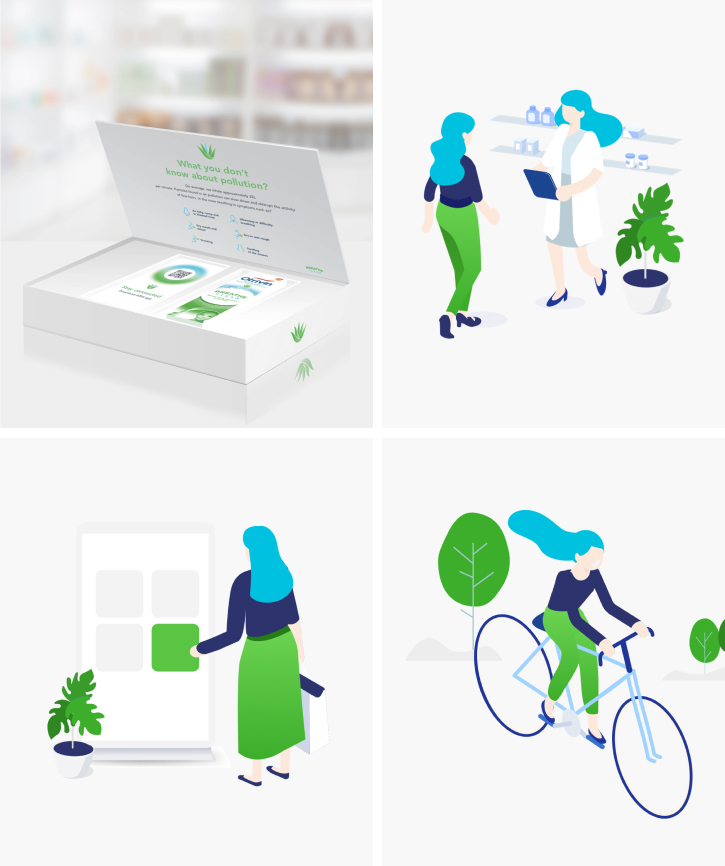
Frame the product as a service
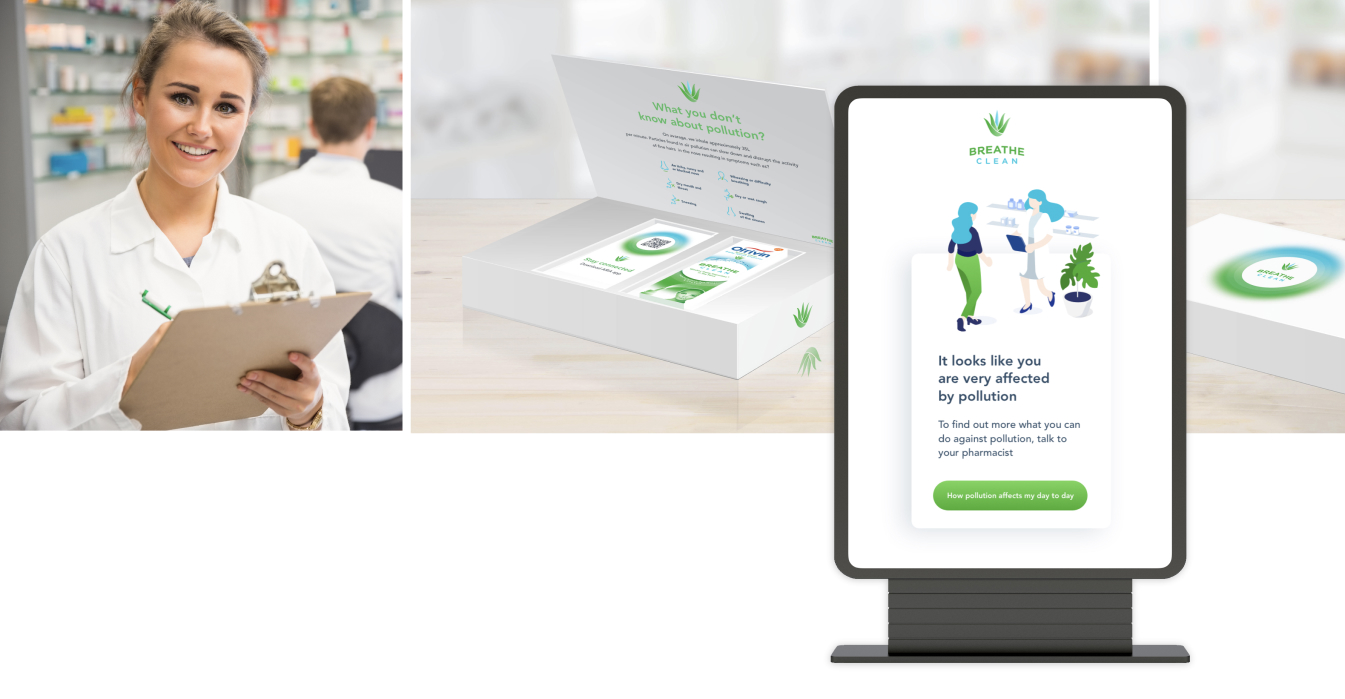
The Breathe Clean package brings together expert information from The Clean Breathing Institute that will make them better aware of the cause and symptoms of pollution and give them strategies that they can bring into their daily routines that will reduce their symptomatic response to pollution.
Engaging consumers beyond
the pharmacy
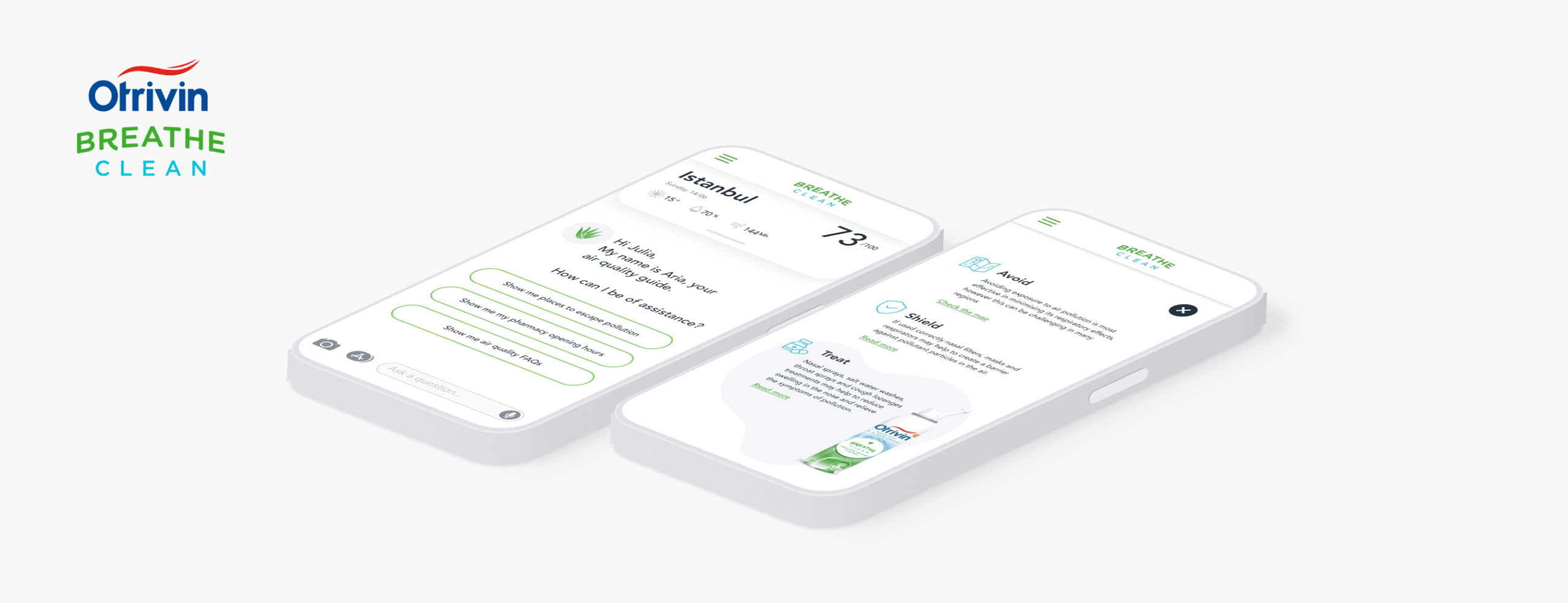
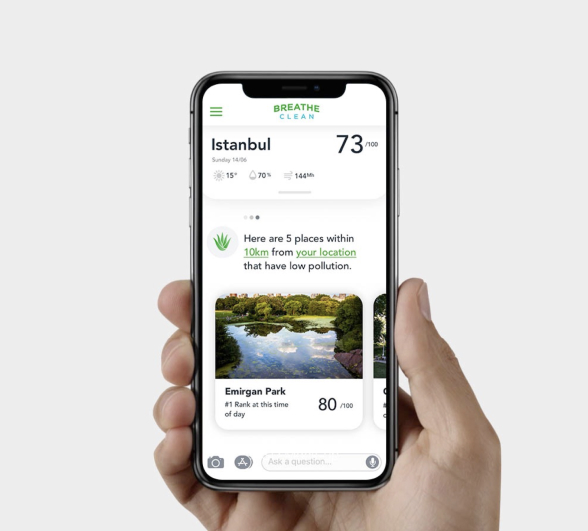
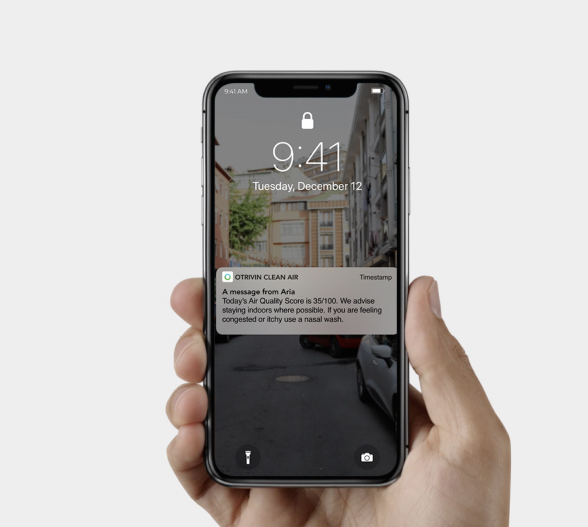
The mobile app allows Julia to take home some of the expert knowledge she experienced in the pharmacy. She can access similar content that was available to her through the Kiosk including the Pollution Quiz, Daily Defence Programme, localised pollution data.
Additionally, she has access to smart reminders and treatment services that reminder her to the treatment guidelines for the Otrivin products and encouragement to adopt a more pollution aware lifestyle.
Engaging consumers beyond
the pharmacy
Pain points
People tend to treat short term symptoms in the moment rather than regularly take preventative measures.
Concerned and "at risk" people Google their symptoms.
Insights
Only 25% of consumers follow through on treatment guidelines. Most stop treatment once the symptoms are gone. There is no link between bigger pollution concerns and day to day symptom treatments. People think a shower washes away the pollution from their bodies.
The informational kiosk inside the pharmacies